Thinking about selling your Marathon home to buyers who dream about life on the water? In the Keys, your dock, lift, and water access can matter as much as your kitchen. Buyers will zero in on safety, depth, permits, and how quickly they can get to open water. In this guide, you’ll learn exactly how to prep your property, what documents to assemble, and which local amenities to highlight so waterfront-minded buyers feel confident and excited. Let’s dive in.
What waterfront buyers want in Marathon
Dock and lift safety and function
Water-savvy buyers look closely at your dock and lift. They want safe walking surfaces, solid pilings, working cleats and ladders, and a lift that runs smoothly. Gather the lift’s make, model, capacity, and recent service records. A clean, safe, and fully operational setup builds trust from the first showing.
Depth, bridges, and navigation
Expect questions about water depth at mean low water, bridge clearances, and the route to open water. If your canal connects easily to Boot Key Harbor, mention it. This city-managed harbor is a principal protected mooring area in the Middle Keys, and many buyers value its access and services. You can reference the City’s information on the harbor and marina location and logistics by pointing to the City’s page for marina hours and directions.
Rules, fees, and nearby access
Buyers will also ask about public ramps, private marinas, and fees. The City maintains a concise list of local launch points and rules on its public boat ramps page. If you are near a private marina, note proximity without promising slip availability. For example, Faro Blanco Resort & Marina may offer transient or guest options based on availability and fees. Always encourage buyers to verify rules and current rates directly.
Environmental and regulatory context
The Florida Keys have sensitive resources like seagrass and coral, and projects often receive review from the Florida Keys National Marine Sanctuary. Be ready to discuss any known constraints or past approvals. For background, you can reference the Florida Keys National Marine Sanctuary for general policies and resource protections.
Get your permits and papers ready
Which permits to gather
In the Keys, dock and shoreline work can involve multiple agencies. Sellers should assemble copies of any State of Florida submerged-lands authorizations or Environmental Resource Permits. See Florida’s rules for sovereignty submerged lands at FAC 18-21.004. If any work occurred in navigable waters or involved dredge or fill, there may also be U.S. Army Corps of Engineers permits or correspondence; the Jacksonville District outlines regulatory programs on its Regulatory page. Where sanctuary resources may be affected, NOAA review can apply. Keep all documents together so buyers can review the path you followed.
As-built survey and shoreline lines
Obtain an as-built survey that shows the mean high-water line and your dock’s footprint. This helps buyers and their surveyors confirm what sits on private uplands versus state-owned submerged lands. The MHW location is central to submerged-lands rules described in FAC 18-21.004.
Maintenance logs and mangrove trimming records
Include maintenance logs for the lift, electrical service, anode replacements, and any piling updates. If mangroves on the shoreline have ever been trimmed, gather permits or documentation from a Professional Mangrove Trimmer. Florida’s Mangrove Trimming Act has specific guidance and limited exemptions; the Florida Department of Environmental Protection maintains a helpful mangrove FAQ for homeowners.
Red flags to prevent
Unpermitted dock or lift work, structures that extend over state-owned submerged lands without consent, or documented impacts to seagrass and coral can delay or derail a deal. Resolve questions early, and be prepared to show evidence of proper authorization under FAC 18-21.004 and any required federal or sanctuary reviews.
Make your dock show-ready
Safety and cleanliness
Repair loose boards, wobbly rails, damaged cleats, and unstable steps. Install or confirm at least one secure ladder and a visible life ring. Pressure-wash decking and clear algae, rust stains, flotsam, and clutter to make the dock safe and photo-ready.
Lift mechanics and corrosion care
Test the lift before photos and showings. Confirm remotes, switches, limit stops, and capacity labels are in working order. Note recent service dates and any corrosion-protection maintenance. Routine anode replacement and inspection are normal in saltwater and help extend the life of steel components.
Lighting and access
Add low-voltage, low-glare lighting on timers for safe twilight showings. Create a clear, level pathway from the house to the dock. If gates or locks are present, ensure agents can access them easily during showings.
Disclosure packet checklist
Bundle your dock drawings, permit numbers, as-built survey, lift manual, and service records in one simple PDF or folder. If you are near the City’s mooring field, it helps to include relevant rules from the City’s Marina Users Agreement so buyers understand local speeds, no-wake zones, and dinghy use.
Stage outdoor living and gear
Create a lifestyle scene
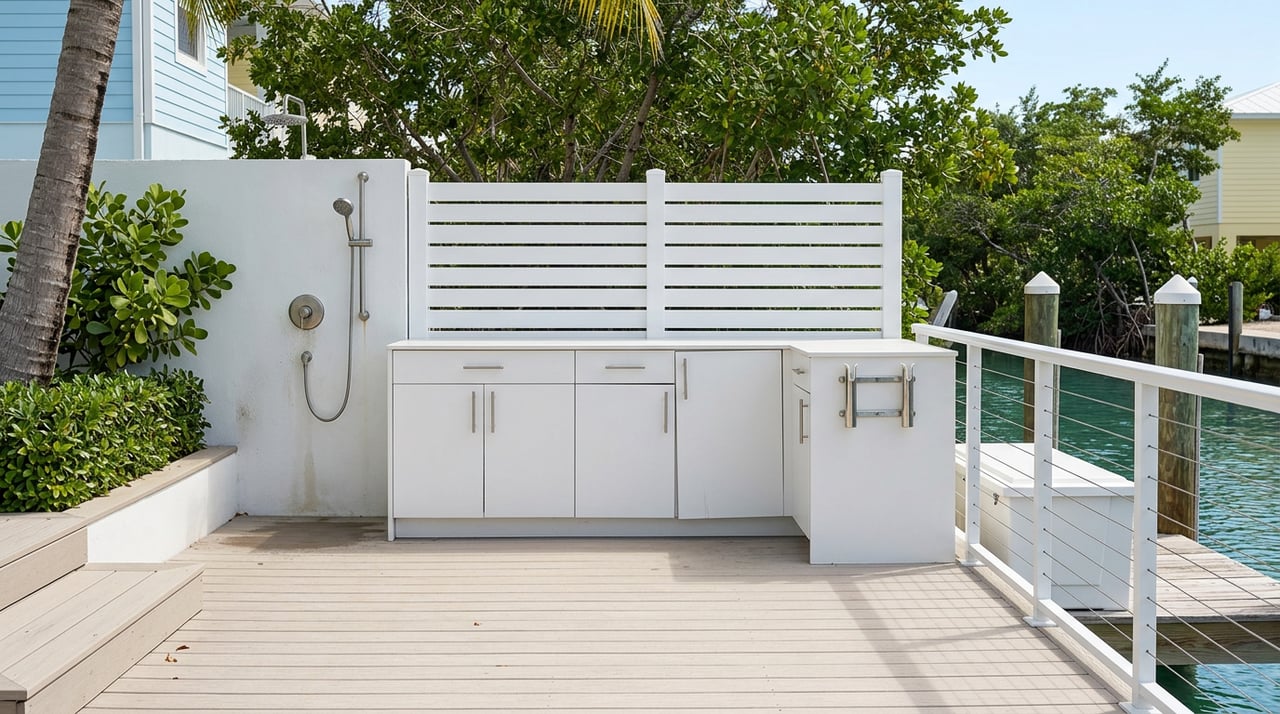
Stage a clean dining or lounge zone with a tidy grill area and a freshwater rinse spot for gear. For photos, limit visible watercraft to a single kayak or paddleboard to show the lifestyle without clutter.
Handle vegetation the right way
Do not trim mangroves without proper authorization. If trimming occurred in the past, include the permit or PMT documentation in your packet. For clear homeowner guidance on what is allowed, refer to the FDEP mangrove FAQ.
Show organized storage
Use racks, hooks, and labeled bins so buyers can see where lines, fenders, lifejackets, and tools will live. If you have a shed or garage, stage it with partial gear to highlight usable storage without overloading the space.
Nail the photos and timing
Plan for calm conditions and good daylight. Schedule photos and showings during a typical-use tide so buyers can visualize boarding and maneuvering. Include at least one aerial image to show proximity to channels, bays, or open water.
Spotlight nearby water access and amenities
- Public boat ramps: The City posts locations and details for several ramps, including 33rd St Gulf, The Quay at MM 54, and Harbor Drive. Share the closest options in your materials and point buyers to the City’s public boat ramps page for rules and fees.
- Boot Key Harbor and City Marina: Note if your route passes through this protected harbor and that it is city-managed. For location and logistics, reference the City’s marina hours and directions.
- Private marinas: If you are near private options, such as Faro Blanco Resort & Marina, mention proximity only. Remind buyers to verify slip availability and terms directly.
- Sombrero Beach: This popular public beach near MM 50 is a well-known local amenity. You can share the City’s page for Sombrero Beach as a reference.
Tip: In your listing packet, include a simple map image with mile markers and estimated drive times to the nearest ramp, marina, and beach. Clearly label “public boat ramp” versus “private marina” and avoid overstating access rights.
Timing, flood maps, and insurance context
Peak season strategy
Buyer traffic in the Keys is often strongest in the winter and early spring. If your timing is flexible, coordinating your launch with peak-season visibility can help, although local market conditions vary each year. For general seasonal context, you can review this overview on the best time to visit the Florida Keys.
Flood maps and elevation certificates
FEMA flood maps for the Keys continue to evolve. The City of Marathon posts updates on preliminary coastal Flood Insurance Rate Maps and how elevations may affect insurance. Before listing, note whether your property sits in a Special Flood Hazard Area, include your elevation certificate if you have one, and share any recent premium estimates. See the City’s guidance on preliminary coastal flood maps.
Pricing and comps
Waterfront premiums depend on location, depth, permitted dock size, and current conditions. Work with your agent to review the most recent closed comps so you price with confidence.
Pre-listing: Dock & Water-Access Packet
Create one concise PDF to share with buyers and in the MLS. Include:
- As-built survey showing the mean high-water line and dock footprint.
- Copies of permits, submerged-lands Letters of Consent or leases, ERP and any Corps permit numbers, plus local building permits. Reference rules in FAC 18-21.004 when applicable.
- Recent dock and lift service records, lift model and capacity, and any inspection notes.
- Photos of the dock and lift at representative tides, plus at least one aerial.
- Marina or mooring details, including key excerpts from the City’s Marina Users Agreement if relevant.
- Elevation certificate or survey data useful for flood insurance and a brief premium history if available.
- Contact info for contractors who have serviced the dock or lift.
- A one-page summary of nearby public ramps, marinas, and Sombrero Beach with links to official City pages.
Ready to sell with confidence?
When you present a safe, clean dock, a well-documented lift, and clear access information, you remove guesswork for waterfront-minded buyers. That clarity can shorten days on market and help you negotiate from a stronger position. If you want a second set of eyes on your waterfront prep or a custom plan for timing and pricing, schedule a free consultation with Jen Davis.
FAQs
What matters most to waterfront-minded buyers in Marathon?
- Safe, functional docks and lifts, clear navigation to open water, documented permits, and proximity to public ramps, marinas, and protected harbors like Boot Key Harbor.
Which permits should I gather before listing my dock and lift?
- Collect any FDEP submerged-lands authorizations or ERPs, U.S. Army Corps permits if applicable, and relevant local permits; see Florida rules at FAC 18-21.004 and the Corps Regulatory page.
How do I handle mangrove trimming on my shoreline?
- Do not trim without proper authorization; include any past permits or PMT documentation and review the FDEP’s homeowner mangrove FAQ.
What nearby access points should I highlight in my listing?
- Share the closest public ramps from the City’s public boat ramps page, note proximity to Boot Key Harbor, and reference nearby private marinas and Sombrero Beach with official City links.
How should I plan photos and showings for a canal-front home?
- Schedule during calm daylight and a typical-use tide, include at least one aerial image, and make sure the dock is clean, safe, and fully accessible for buyers.