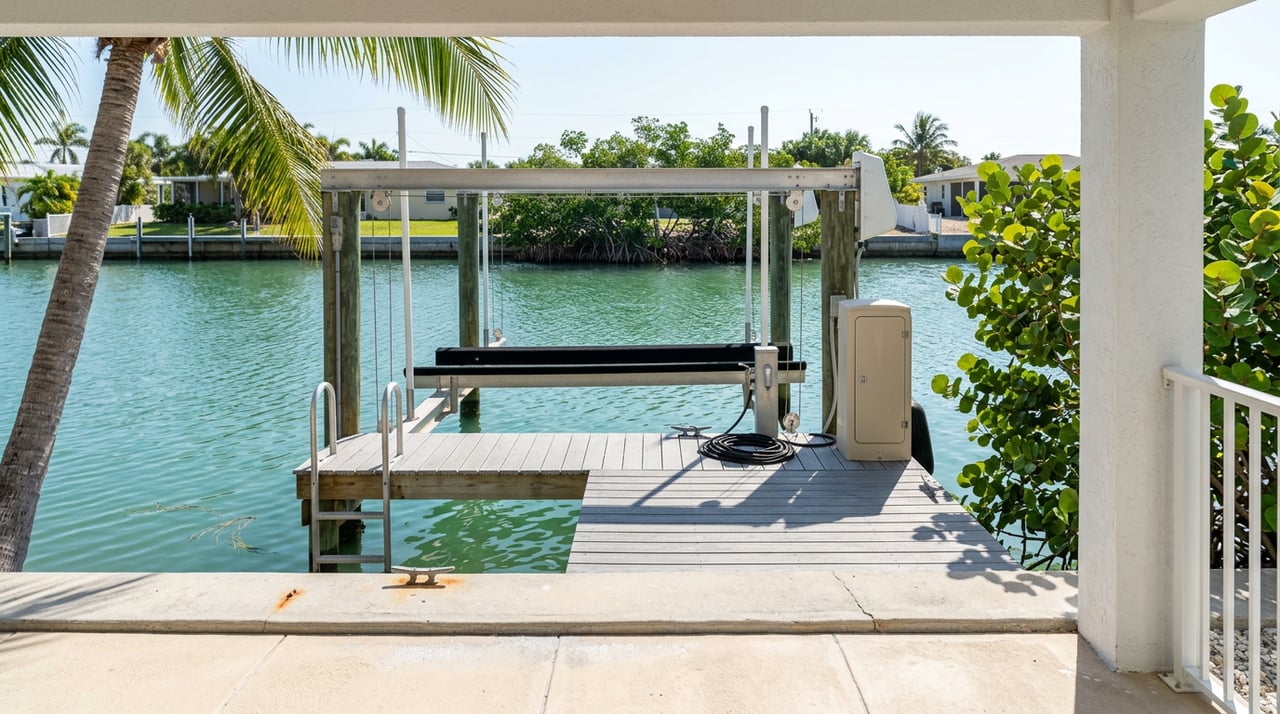
If you picture stepping from your back porch onto a boat and cruising into turquoise water, a canal-front home in Marathon can make that real. The trick is matching the dream with the details that control everyday boating and long-term ownership. In this guide, you’ll learn how depth, permits, lifts, seawalls, and storm risk shape value and access in the Middle Keys. Let’s dive in.
Canal-front living in Marathon
Marathon sits among protected waterways with quick runs to the Gulf, Atlantic, and reefs. Boot Key Harbor is the local hub, with a large municipal mooring field and city marina services that support day boaters and liveaboards. You can review the program and services on the City’s Marina and Ports page at the City of Marathon’s marina portal.
Not all canals are the same. Widths, turns, and depths vary street by street, and shifting shoals mean local knowledge matters. Navigation references note that approaches to Boot Key Harbor and nearby channels require close attention to marks and depths. You can see this emphasis on local conditions in the U.S. Coast Pilot excerpt.
The Florida Keys National Marine Sanctuary supports boating access with mooring buoys at popular reef sites, which helps protect seagrass and coral. If your private dock cannot host your boat year-round, these public resources and municipal options can be valuable backups. Learn more about the buoy system through the Sanctuary’s mooring buoy program overview.
The rulebook that shapes your dock
Canal-front property in the Keys is regulated at multiple levels. Projects often need state authorization for submerged lands, federal review, and then local permits. A common path relies on the U.S. Army Corps State Programmatic General Permit, which coordinates federal and state reviews. You can read the program summary on the USACE SPGP page.
Monroe County’s Land Development Code sets key limits that directly affect your boat:
- A dock cannot preempt more than 25 percent of the navigable portion of a waterway.
- A docking facility typically needs at least 4 feet of water at Mean Low Water (MLW) at the terminal end unless a specific exception applies.
These rules influence what you can berth and how you access open water at low tide. Review the county standards in the code section on docking facilities.
If seagrass or hardbottom is present, expect extra standards. Designs may require grated decking or minimum elevations to reduce shading, and a benthic survey is commonly needed to document conditions. The same county code section outlines these requirements.
Vertical seawalls face additional scrutiny. Florida statutes limit new vertical shoreline hardening on open water, with more flexibility inside man-made canals or where erosion control is necessary. Replacement or hardening projects often need careful justification and multiple approvals. See the statewide framework in Chapter 373 of Florida Statutes.
Two practical reminders will save you time and money:
- Get state and federal clearances before you expect local building permits.
- Submit complete bathymetric and benthic surveys with your applications so reviewers can assess depth and habitat. For a plain-English walk-through of typical Keys dock submittals, this permitting roadmap is helpful: Florida Keys dock permit overview.
Can your boat reach open water?
Getting from your dock to the channel safely is everything. Focus on four access checks:
- Depth vs draft at low tide. The county’s 4 ft MLW benchmark is a practical baseline for many small powerboats. Verify published depths at the terminal end and ask for recent bathymetry. The rules are in the county’s docking standards.
- Distance and turning room to a marked channel. Tight turns or long canal runs can be challenging for larger boats. Review approach notes in trusted navigation guides like the U.S. Coast Pilot excerpt, and confirm any fixed bridge clearances on your route.
- Habitat in the approach. Seagrass and hardbottom areas limit dredging and restrict prop scarring. Designs often rely on elevated or grated decking to reduce impacts, and enforcement within the Keys is active. See the Sanctuary’s resource protection context in this overview of responses.
- Backup mooring options. If your canal is shallow or seasonal winds shift sand, the Boot Key Harbor mooring field and City Marina services can bridge the gap. Details on availability, fees, and pump-outs are on the City’s marina page.
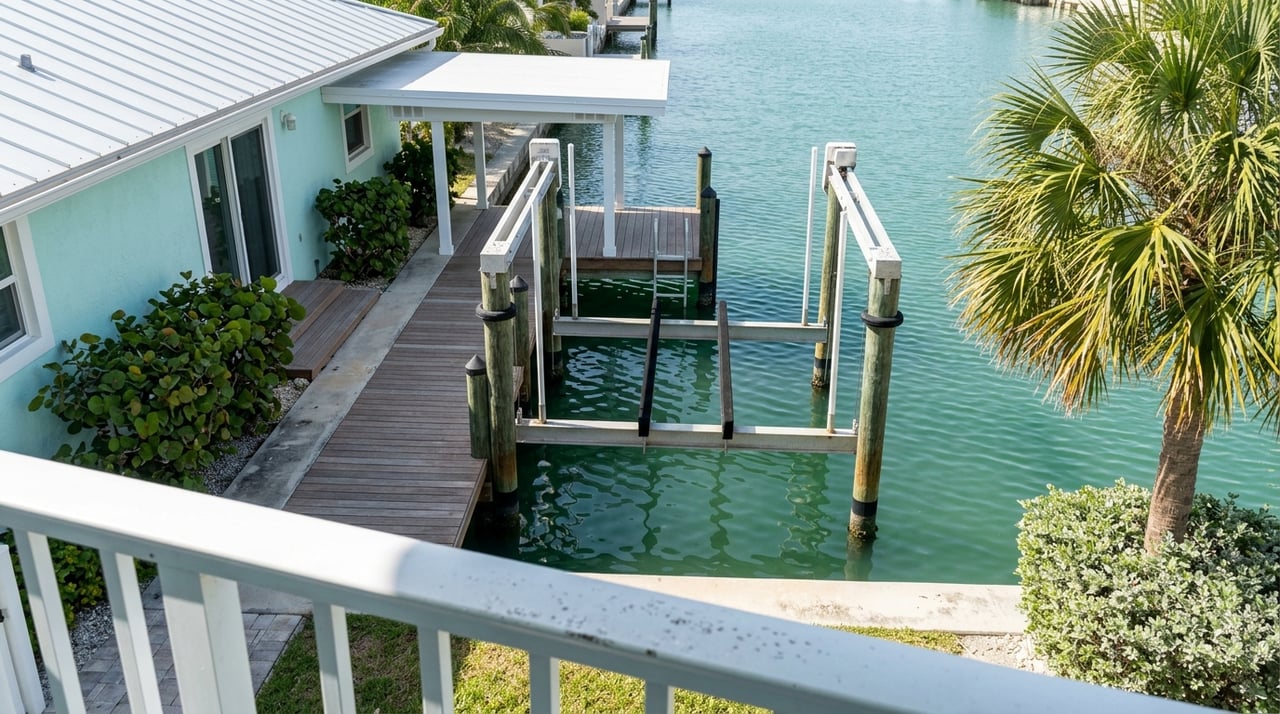
Dock, lift, and seawall: what to inspect
A beautiful dock in photos is not enough. Ask for documents and review the build quality on site.
- Permits and as-builts. Confirm that the dock, seawall, boat lift, and any utilities were permitted and passed final inspection. Monroe County maintains public records; start here: Monroe County permitting portal.
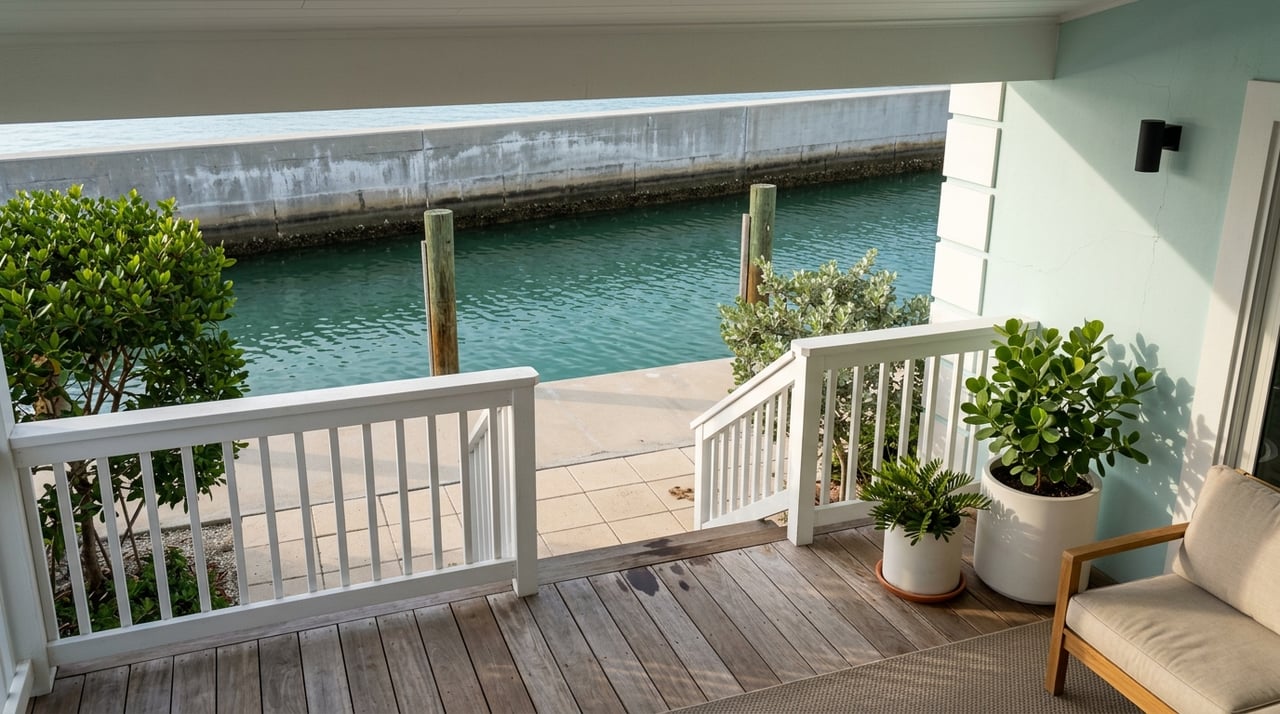
- Seawall ownership and limits. Determine who owns the bulkhead and whether it is a permitted vertical wall. Open-water seawall work is more restricted than work inside man-made canals under state law. See Florida’s framework in Chapter 373.
- Boat lift specs and approvals. Note the lift’s rated capacity, make, model, year installed, and whether the installation was permitted. Setbacks, clearances, and electrical components can change permit types. The USACE SPGP guidance covers common minor structures; review the program description.
- Dock utilities and use limits. The county code places limits on dockside electrical service and potable water hookups and restricts non-residential uses. Verify that current hookups match what was permitted in the docking facilities code.
- Habitat-friendly design. Where seagrass is present, expect grated decking, narrower walkways, and elevation standards that reduce shading. These choices can affect cost and deck space. For an at-a-glance explanation, see the permit overview.
- Condition and lifecycle. Saltwater is tough on timber, concrete, steel, and fasteners. Hire a licensed marine surveyor and request bids from local marine contractors for any needed repairs or replacements.
Storms, floods, and long-term costs
Marathon has hurricane exposure and flood risk. Before you bind coverage or finalize an offer, pull the property’s FEMA flood map panel and request an Elevation Certificate so your insurer can quote accurately. Post-storm assessments following Hurricane Irma highlight damage patterns and code adaptations; you can read a technical review in this Mitigation Assessment Team report summary.
Plan for long-term adaptation. Monroe County communities face significant costs to maintain shoreline infrastructure over time, and seawalls, docks, and raised foundations are part of that future budget. For context on cost drivers, this summary on coastal protection discusses the scale of investment needed: High Tide Tax overview.
Insurance is specialized here. Wind and flood coverages, deductibles, and endorsements vary, so loop in a local broker early. Quotes are site-specific and depend on construction details, elevation, and claim history.
Buyer checklist for Marathon canal homes
Use this list to turn a pretty listing into a real boating plan.
Permit and record checks
- County or City permit numbers for dock, seawall, and boat lift, plus as-built drawings and final inspections. Start your search at the Monroe County permitting portal.
- Any state submerged lands consent or lease if structures extend over sovereign bottoms. See the Keys-specific submittal notes in this dock permit overview.
- U.S. Army Corps authorization or the specific State Programmatic General Permit citation for prior work. Reference the SPGP description.
- HOA or community covenants that govern dock use or shared maintenance, if applicable.
Boating access and navigation
- Measured terminal depth at MLW with the date of the last bathymetric survey. Confirm whether depth meets the county’s 4 ft MLW benchmark in the docking standards.
- Distance and route to the nearest marked channel, plus any fixed bridge clearances. Consult navigation notes in the U.S. Coast Pilot excerpt.
- Evidence of seagrass or hardbottom from a benthic survey. If present, confirm any special decking, elevation, or mooring restrictions per the county code.
Dock, lift, and utilities
- Dock length, usable terminal depth, condition of piles and hardware, visible rot or settlement, and age of the structure.
- Boat lift make, model, rated capacity, install date, permit numbers, and maintenance receipts. Check typical limits in the SPGP guidance.
- Electrical capacity at the dock and potable water hookups, verified against the county’s dock utility limits.
Legal, ownership, and insurance
- Who owns the submerged land seaward of the bulkhead and whether the seller holds recorded state consent if required. Keys-specific steps appear in this permitting roadmap.
- Any open code compliance cases, storm damage claims, or unpermitted work. Ask for recent repair invoices and claim summaries.
- A current Elevation Certificate to speed flood and wind quotes. See Irma lessons learned in the MAT report summary.
Operations and convenience
- Availability and rules for the Boot Key Harbor mooring field, dinghy docks, pump-outs, and transient services. Check the City’s marina portal.
- Proximity to fuel, haul-out, and service marinas you plan to use.
Common pitfalls to avoid
- Assuming “waterfront” equals deep water. The 4 ft MLW rule and canal width limits can make a handsome dock functionally shallow for larger vessels. Confirm depths in the county code.
- Skipping surveys. Missing bathymetry, benthic surveys, or submerged lands consent can stall or downsize your dock plan. A clear roadmap appears in this permit overview.
- Ignoring approach constraints. Bridge clearances, turns, and unmarked shoals matter as much as depth at the dock. Review navigation notes in the U.S. Coast Pilot excerpt.
- Waiting on insurance. Without an Elevation Certificate and construction details, accurate quotes can lag. Use Irma’s lessons as a planning lens via the MAT report summary.
Local guidance, start to finish
When you buy a canal-front home in Marathon, the right local checks protect both the lifestyle and the investment. From verifying MLW depths and lift capacity to lining up permits and insurance, a clear plan helps you close with confidence. If you want a second set of eyes and a neighborly guide to the Middle Keys, reach out to Jen Davis to schedule a free consultation.
FAQs
What does 4 ft MLW mean for docks in Monroe County?
- It is a county standard that docking facilities generally need at least 4 feet of water at Mean Low Water at the terminal end, which shapes what vessels can use a dock at low tide; see the county’s docking standards.
How do Boot Key Harbor moorings work if my canal is shallow?
- The City of Marathon manages a first-come mooring field with services like pump-outs; review rules, availability, and fees at the City’s marina portal.
Do I need permits to add or upgrade a boat lift in Marathon?
- Yes. Lifts typically require approval that may rely on the U.S. Army Corps SPGP and local permits; see the USACE SPGP overview.
What documents should I request when buying a canal-front home?
- Ask for permit numbers, as-builts, final inspections, bathymetry and benthic surveys if applicable, and any submerged lands consent; start record searches at the Monroe County permitting portal.
Are new seawalls allowed on canal-front lots in the Keys?
- New vertical seawalls are limited by state law and local code, with more flexibility inside man-made canals than on open water; review the statewide framework in Florida Statutes Chapter 373.
How should I factor storms and flood risk into a Marathon purchase?
- Request an Elevation Certificate, consult FEMA flood maps, and coordinate early with a local insurance broker; for context on past impacts, see the Irma Mitigation Assessment Team report summary.