Wondering why one Key Colony Beach waterfront home sells for more than another, even when both sit on the water? In this market, the answer often comes down to what the property can actually do for you day to day, not just the word “waterfront” on a listing. If you are buying or selling in Key Colony Beach, understanding the local factors behind value can help you price smarter, negotiate better, and avoid surprises. Let’s dive in.
Waterfront Means Different Things Here
In Key Colony Beach, not all waterfront exposure is the same. The city’s zoning map distinguishes areas along the Atlantic Ocean, Shelter Bay, Bonefish Bay, and the Key Colony Beach Channel, which means location on the water can vary quite a bit from one block to the next.
That matters because buyers are often comparing more than scenery. They are also looking at boating access, how open the water feels, and what kind of lot and dock setup comes with the home.
Dock Utility Drives Real Value
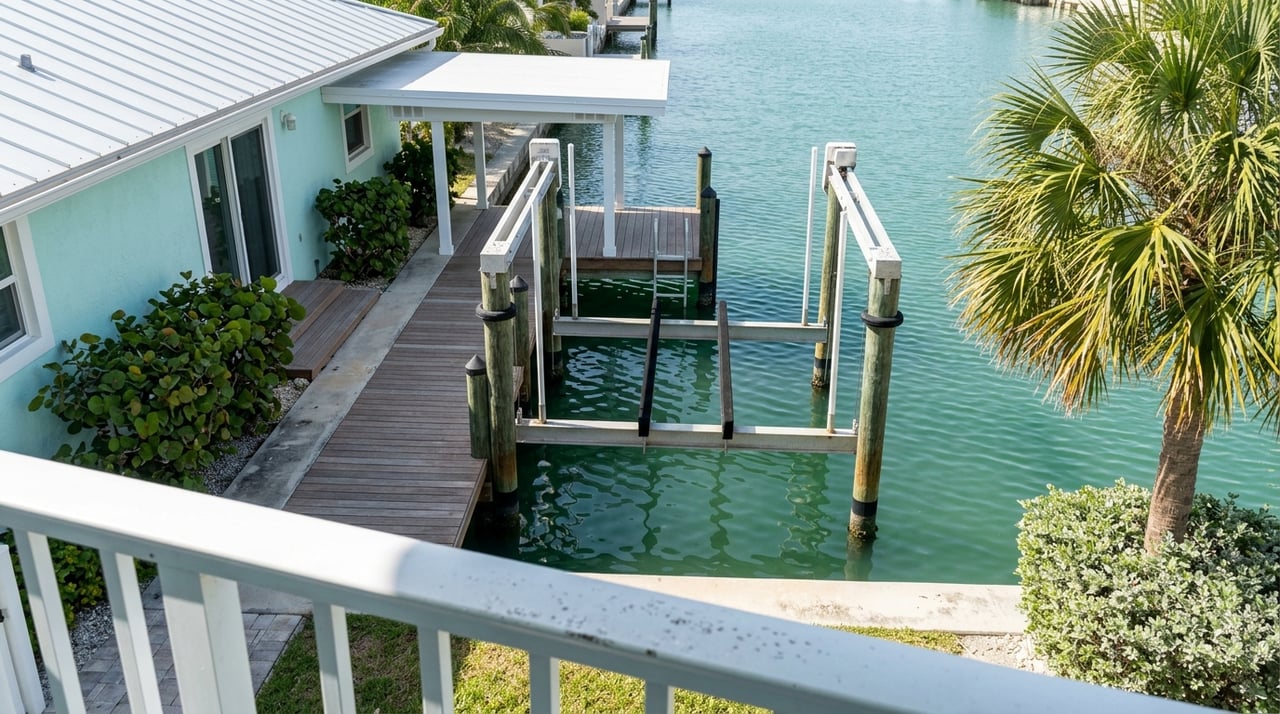
A big price driver in Key Colony Beach is dock utility. In the city’s residential districts, private boat docks or piers are permitted uses, and several districts also allow dockside shelter and related uses. That means the value is often tied to how well the dock works for your actual boating needs.
If you own a boat, details like fit and maneuverability matter. City rules say a boat cannot exceed the waterfront property lines available with the house, and boats and lifts must stay within property boundaries and riparian lines. A property may look ideal online, but if it cannot comfortably handle your boat, lift, or dock layout, its value to you changes fast.
City boating rules also require idle or no-wake operation within all Key Colony Beach waterways and landward of the buoys off the Atlantic Ocean and Vaca Cut shorelines. That does not reduce value on its own, but it does shape how owners experience access and navigation every day.
Canal Width Can Change the Numbers
Two canal homes on the same street can perform very differently in the market. In some canal areas, local measurement rules affect the usable boating space in ways that are not obvious from a basic listing photo.
For example, in Coury Subdivision #2 canals, channel width is defined by the outer edges of the wooden docks. At the open end of those canals and the Coral Lane Canal, the limiting measurement is 30 feet from the centerline to the dock or seawall. That kind of geometry can directly affect docking ease, turning space, and lift placement.
Approvals Are Not Always Automatic
Another local factor is that approvals involving boat or lift installation can be based on neighbor consent, visual impact on neighboring properties, and navigation hazards. So even when two homes seem similar, the path to modifying or upgrading the dock setup may not be the same.
For buyers, this makes due diligence especially important. For sellers, it helps explain why a well-documented dock and lift setup can strengthen buyer confidence.
Lot Geometry Affects Use and Flexibility
In Key Colony Beach, lot size and width are not minor details. They directly affect the house footprint, outdoor living space, setback options, and future renovation flexibility.
The zoning code sets different minimums by district. R-1A requires 7,500 square feet and 75 feet of width. R-1B requires 6,000 square feet and 60 feet of width. R-2A also requires 6,000 square feet and 60 feet of width, while R-2B allows 5,500 square feet and 40 feet of width.
A wider lot can create more room for circulation, outdoor enjoyment, and dock planning. In some cases, combined lots or corner lots may also follow different setback rules, which can change how much of the parcel is practically usable.
Setbacks Shape the Buildable Envelope
Setback rules can have a real effect on value because they shape what can be built, expanded, or remodeled. Some higher-density districts also limit fences, walls, or hedges over 4 feet in required side yards, which can influence privacy and openness.
A very local example is along Vaca Cut. In R-1A, the rear yard minimum is 50 feet from mean high tide along Vaca Cut. That larger setback can reduce the buildable area compared with other waterfront locations, which may affect both renovation options and how the lot feels.
Zoning Impacts Future Potential
One reason waterfront values vary so much is that zoning does more than label a property. It determines what type of building can exist there and, in some cases, what future use may be possible.
R-1A is a single-family district. R-2A and R-2B allow one- and two-unit dwellings. R-3 allows multiunit uses. RH allows hotel, beach club, restaurant, and other resort-oriented uses. Because of that, two parcels with similar water views may carry different value based on use potential alone.
For buyers, this can shape long-term plans. For sellers, it means the strongest marketing often highlights not just the home itself, but the property’s practical flexibility within local rules.
Elevation and Flood Compliance Matter
In Key Colony Beach, flood compliance is a core value factor, not a side issue. Monroe County states that all of Monroe County is in a floodplain, and base flood elevations range from 6 to 17 feet above mean sea level.
The city’s zoning code also ties height to flood elevation in several districts. In some cases, maximum height depends on whether habitable space sits below or above the applicable base flood elevation, and some elevated structures must include additional freeboard. That can affect usable square footage, views from upper levels, and future building options.
Permit History Can Influence Price
The city’s 2024 floodplain ordinance requires flood-hazard review items such as FEMA elevation certificates, VE-zone certification where applicable, nonconversion agreements for enclosed areas below elevated buildings, and flood damage-resistant materials. The ordinance also defines substantial damage and substantial improvement using a 50 percent of market value threshold.
That means permit history, elevation documentation, and renovation scope can directly affect how buyers view risk. A home that is already elevated, has clearer compliance records, or appears easier to update may feel more straightforward to a buyer, which can support stronger pricing.
Views and Orientation Still Count
Of course, visual appeal still matters. Waterfront orientation can shape how open the setting feels and how a property connects to the broader coastal environment.
The code itself reflects these differences. For example, the RH resort hotel district is intended for properties with a waterfront, ocean resort orientation, and it includes a 100-foot ocean setback from the mean high water line. That is a good reminder that oceanfront and canal-front properties are not interchangeable just because both are on the water.
For many buyers, value comes from the mix of usable boating access, openness, and everyday enjoyment. The best-performing homes often deliver more than one of those benefits at once.
Daily Function Can Add Appeal
Lifestyle matters in Key Colony Beach, and some value comes from how easy the property is to live in. City land use includes public recreation areas, public parks, public restrooms, and public parking that includes boat trailers in designated public districts.
The city’s parks materials reference Sunset Park and nearby Gazebo Park. A September 2024 city update also said the 7th and 8th Street park project would add 2 tennis courts and 6 pickleball courts. These features are not part of a home’s waterfront footprint, but they can support the resort-style atmosphere many buyers expect here.
Parking and Storage Matter for Boaters
City rules also restrict street parking, boat trailer parking, live-aboards, and certain nuisance behaviors. That means practical features such as off-street parking, guest parking, and trailer storage can make a real difference in daily convenience.
For boating households, this can be more important than it sounds. A home with a workable dock but poor parking or limited boat-related storage may not live as smoothly as one with a more complete setup.
What Buyers and Sellers Should Watch Closely
If you are comparing Key Colony Beach waterfront homes, it helps to look past headline features and focus on how the property functions under local rules.
Pay close attention to:
- Dock size and lift fit
- Canal geometry and turning room
- Riparian and property-line limits
- Lot width and total lot size
- Setbacks that affect expansion potential
- Zoning district and allowed building type
- Elevation, freeboard, and flood documentation
- Off-street parking and trailer practicality
- Proximity to parks, marina-oriented services, and public amenities
This is where local knowledge really matters. On paper, two homes may look close in size and setting, but the one with the easier dock layout, cleaner compliance picture, or more flexible lot can stand apart.
In Key Colony Beach, waterfront value is rarely about water alone. It is about boating utility, lot usability, compliance, future options, and how comfortably the property fits the way you want to live in the Keys. If you want help sorting through those details or positioning a home for the market, Jen Davis can help you make sense of what truly drives value here.
FAQs
Why do Key Colony Beach canal homes on the same street sell for different prices?
- Canal width, riparian limits, dock layout, lift fit, and navigation constraints can change the property’s real boating utility, even when homes appear similar at first glance.
Why does elevation matter for Key Colony Beach waterfront homes?
- Elevation matters because Monroe County treats the entire county as floodplain, and city rules tie flood compliance, permits, and some building standards to flood-hazard requirements.
Do wider lots add value in Key Colony Beach?
- Wider lots can offer more flexibility for setbacks, building envelope, outdoor use, and dock planning, although the exact value impact depends on the specific property and zoning district.
Can dock or boat-lift changes affect a Key Colony Beach home’s value?
- Yes. Approvals for boat or lift installation can depend on factors like neighbor consent, visual impact, and navigation hazards, which can influence future usability and buyer interest.
Does zoning affect waterfront home value in Key Colony Beach?
- Yes. Zoning determines allowed building types and use potential, so two similar waterfront parcels may have different value based on what can legally be built or maintained there.