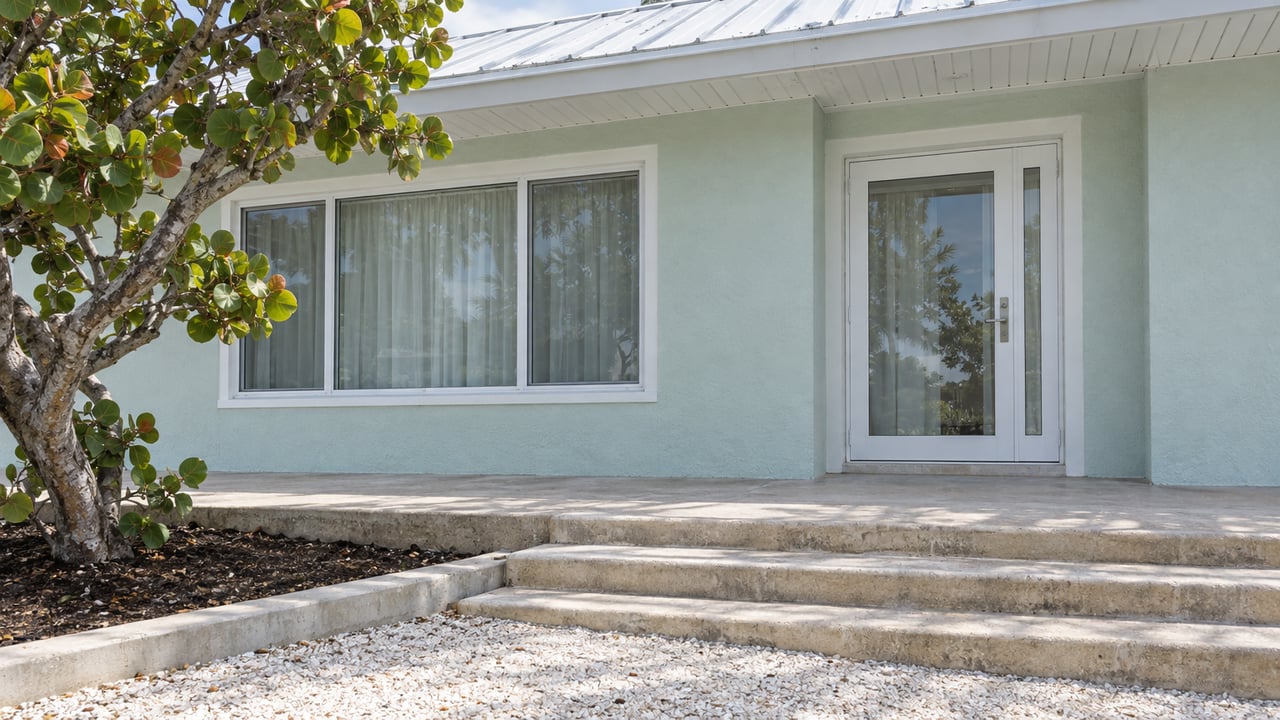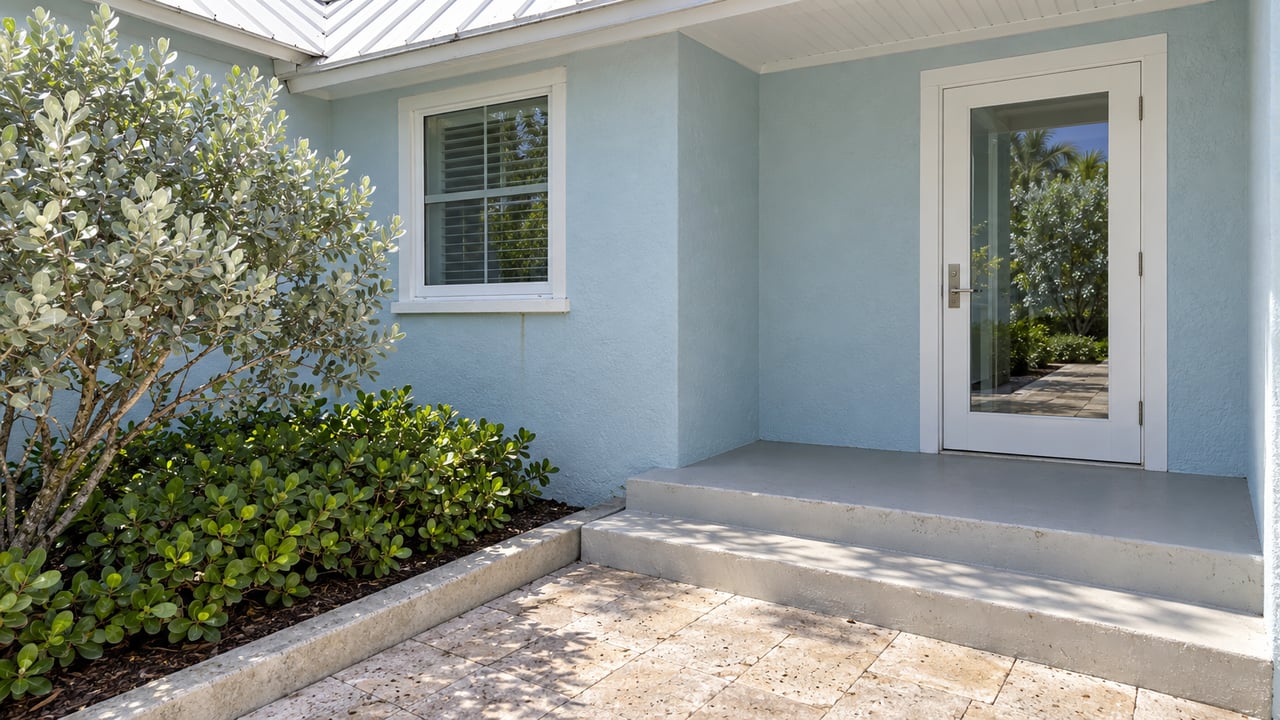
Drive past 600 West Ocean Drive this month and you will see scaffolding, a chain-link perimeter, and a building that looks less like Marble Hall than a construction site wearing its old address. That is the point. After nearly a decade of design fights, a lawsuit, a scrapped $8.375 million contract, and a groundbreaking that finally happened the week before Christmas 2025, Key Colony Beach's City Hall is supposed to reach substantial completion this September. If you have lived here through any part of this, you already know the timeline was never really the story. The story is what a town of fewer than 800 people will fight over, and why that fight is the whole reason this city exists.
A City That Chose to Answer to Itself
Key Colony Beach was not always its own city. Before the 1950s it was Shelter Key, a low, unremarkable island that developer Phil Sadowski began dredging and filling to raise its elevation and build a planned community of canals and waterfront lots. By 1957, nearby Marathon residents were talking about folding the area into a single municipality. Sadowski wanted none of it. He pushed for Key Colony Beach to incorporate on its own, and in September 1957 the vote passed unanimously.
That decision paid off almost immediately. When Hurricane Donna tore through the Keys in 1960, Key Colony Beach's status as a separately incorporated city meant it qualified for its own federal disaster grant, while Marathon, not yet its own city, had to settle for a slice of whatever Monroe County received. Independence bought speed and direct access to recovery money. It also meant every future decision, from a seawall to a stop sign, would be made by a five-person commission answering to a few hundred voters instead of getting absorbed into a larger bureaucracy where disagreement gets diluted. The City Hall saga is that same bargain playing out more than six decades later, just with a fitness center and an ADA entrance instead of storm debris.
The $8.375 Million Building That Never Got Built
Marble Hall, the city's original hall, sat damaged and largely unusable for years after Hurricane Irma. What followed was not a straightforward repair. City leaders debated for years whether to patch the old building or start over, cycling through architects, floodplain consultants, and at least two full design concepts before anything went out to bid.
The clash came to a head on July 20, 2023, when the commission split 3-2 during a nearly five-hour meeting to award an $8.375 million contract to Miami-based Hands On Builders LLC for a brand-new building, beating out a $12.487 million bid from an Alabama firm. Several residents in the room objected outright, arguing the city should repair what it had instead of building new.
They did not let it go. By September, roughly 250 KCB voters had signed a petition demanding a referendum on the decision, and resident Laurie Swanson filed a civil suit seeking a temporary restraining order. On December 20, 2023, the commission voted 4-0 to reverse course, repeal the contract award, and settle the lawsuit rather than fight it out. In a city where the 2020 census counted 790 residents, that many voters organizing a formal legal challenge over a municipal building is not background noise. It is the system doing exactly what a town this size was built to let it do.
The Compromise That Cost Less Than the Fight
What replaced the scrapped new build was a hybrid: harden the existing Marble Hall and post office, and add a two-story wing onto the south end rather than tear everything down. Architect Brandan DeCaro of the firm CPH presented final plans in August 2025, and the commission approved cost estimates of roughly $3.9 million for the 12,400-square-foot project, including a 10 percent contingency.
By the time a contractor was actually selected that December, the number had climbed to $5.5 million, the same kind of jump DeCaro had warned about months earlier when he flagged an uncertain bidding environment with tariffs affecting supply costs. Even so, that $5.5 million figure is nearly $2.9 million less than the new-build contract residents fought to kill back in 2023. The years of arguing were not just delay. They landed on a cheaper outcome than the one nobody wanted in the first place.
A $2.28 million storm-hardening grant from the Florida Department of Environmental Protection covers a little over 40 percent of the final cost, which means the city and its taxpayers are on the hook for roughly $3.22 million beyond the grant. That grant also came with a June 30, 2026 billing deadline, which is part of why the contractor was given 273 days from groundbreaking to reach substantial completion, a clock that lands right around this September.
What's Actually Opening
Once the scaffolding comes down, residents get:
- A hardened Marble Hall and post office built to current storm standards
- A new two-story, 4,200-square-foot addition with offices and a lobby
- An ADA-compliant entrance and a small fitness center
- New roofing and landscaping
- A new patio and a backup generator
As Keys Weekly reported, Mayor Freddie Foster told the crowd at the December 19, 2025, groundbreaking that the project had been through "some birthing and growing paints in the years since Hurricane Irma," adding that at one point the city believed the old building was damaged beyond repair. Secretary/Treasurer Tom Harding thanked residents directly for their patience, saying the city now has "a great team working with our commissioners and staff." Guest speaker Mike Puto, grandson of founder Phil Sadowski, closed the ceremony by noting his grandfather developed the island back in the early 1950s and would be proud of what the city had done with it.
The Same City Runs on Smaller Machinery Too
None of this argues that Key Colony Beach's government is slow for its own sake. The same commission that spent years litigating a building addition also spends its August meetings recognizing Police Chief Kris DiGiovanni for 20 years of service and celebrating the monthly Hot Dogs in the Park cookouts at Sunset Park, where officers and residents show up to eat and talk shop. That is what a city this size actually looks like day to day: the same handful of elected neighbors handling a multimillion-dollar construction contract on Tuesday and flipping burgers with the police department the next month.
If you live here, you already know this rhythm. The building at 600 West Ocean Drive was never just a construction project. It was a small, self-governed city proving, slowly and at real financial cost, that the independence its founder fought for in 1957 still means something. The building will be done soon. The way this city argues its way to a decision is not going anywhere, and that is exactly the trade Key Colony Beach signed up for.
If watching a town this small fight this hard for its own city hall makes you curious about what else makes Key Colony Beach tick, Barefoot in the Keys keeps close tabs on it, along with the rest of the Middle Keys. Explore more of the neighborhood on our Key Colony Beach page, or if you are thinking about a future here yourself, schedule a free consultation with Jen Davis to talk through what life in a city this size is really like.