Wondering why two Marathon properties with similar prices can have very different monthly costs? In the Florida Keys, HOA and condo fees can change the real cost of ownership more than many buyers expect. If you are comparing communities in Marathon, this guide will help you look past the advertised fee, understand what you are actually paying for, and spot the questions that matter most before you move forward. Let’s dive in.
Why fees matter in Marathon
In Marathon, association fees are not just about upkeep and amenities. They can also reflect insurance costs, reserve funding, and large-scale repair obligations that carry extra weight in a coastal market.
Monroe County says all of the county is a coastal floodplain, and flood insurance is a significant part of housing costs and cost of living. That makes it especially important to treat HOA and condo fees as part of your full monthly carrying cost, not as a side note.
HOA fees vs condo fees
In Florida, condos and homeowners' associations follow different laws. Condominiums are governed by Chapter 718, while homeowners’ associations are governed by Chapter 720.
That distinction matters because the rules around budgets, reserves, disclosures, and assessments are not the same. In Marathon, the community label is useful, but the governing documents tell you what the fee really covers and how future increases can happen.
How condo fees usually work
Condo assessments are generally tied to common expenses and are typically billed at least quarterly. The budget is required to be detailed and show revenues and expenses by account.
A condo fee may include common-area maintenance, insurance, reserve funding, and repair obligations. Under Florida condo law, property insurance deductibles and excess losses are generally treated as common expenses in many cases, which can push monthly costs higher in coastal communities.
How HOA fees usually work
HOA budgets must show operating expenses, any estimated surplus or deficit, and separate charges for recreational amenities if those apply. Reserve structures in HOAs are more flexible than in many condo communities.
An HOA can establish, reduce, or waive reserves by member vote under Chapter 720. That means a lower HOA fee may look attractive at first, but it can also mean future costs are being delayed rather than fully funded.
What a fee may actually cover
The most important question is simple: what does the fee pay for line by line? The answer should come from the declaration and the budget, not from marketing remarks.
In Marathon communities, fees may cover items such as:
- Exterior maintenance
- Roof work
- Master insurance
- Flood or wind coverage
- Trash service
- Water and sewer
- Pest control
- Landscaping
- Pool maintenance
- Dock or marina upkeep
- Elevator service
- Professional management
- Reserve funding
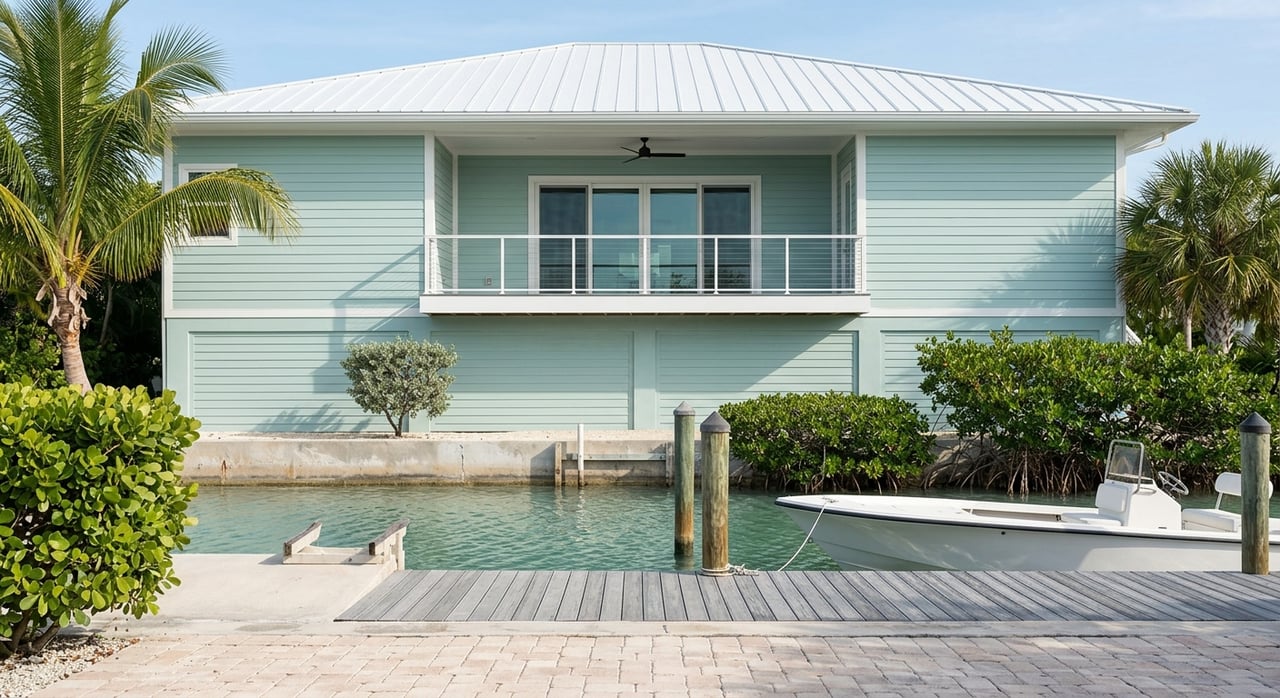
If you are comparing waterfront or resort-style properties, this line-by-line breakdown matters even more. A community with docks, elevators, or larger shared structures may have a higher fee for reasons that are practical and predictable.
Why reserves deserve close attention
Reserves are one of the biggest clues to whether an association is planning ahead. They help fund future capital repairs and deferred maintenance rather than relying entirely on surprise assessments later.
For many Marathon buyers, a community with stronger reserves may offer more stability even if the monthly fee is higher. A lower fee can be appealing, but it is not always the better value if the association is underfunded.
Condo reserve rules are now stricter
For residential condos with buildings that are three habitable stories or higher, Florida requires a structural integrity reserve study, or SIRS, at least every 10 years. The study covers major items such as the roof, structure, fireproofing and fire protection systems, plumbing, electrical systems, waterproofing and exterior painting, windows, and exterior doors.
The study must be performed or verified by a licensed engineer or architect, or by a certified reserve specialist or professional reserve analyst. For older owner-controlled condos that were already in place by July 1, 2022, the required study was generally due by December 31, 2025, unless a timing exception applied, and even then not beyond December 31, 2026.
For a Marathon buyer, that timing matters. If a condo has not completed its required study, it could be facing delayed repairs, catch-up reserve funding, or future assessment increases.
HOA reserves are more flexible
HOAs work differently. Under Chapter 720, reserve accounts can be created by majority approval of the total voting interests, and once created, reserve amounts are calculated using remaining useful life and replacement cost or deferred maintenance expense.
If an HOA does not fully fund reserves, the annual financial report must include a prominent warning that underfunding may lead to special assessments. That warning is worth your full attention because it can signal that today’s lower monthly fee may not reflect tomorrow’s real cost.
Special assessments: the risk to watch
Special assessments are often where buyers feel the biggest surprise. Associations may use them to cover underfunded reserves, major repairs, or large projects that were not fully addressed in the regular budget.
In condos, written notice of a special assessment must state the specific purpose, and the money collected can only be used for that stated purpose. In HOAs, buyers receive a disclosure summary explaining that assessments and special assessments can change and that unpaid assessments can become a lien on the property.
When you compare communities in Marathon, ask whether there have been any special assessments in the last three to five years and whether any are still active. That history can tell you a lot about how the association plans, budgets, and responds to large expenses.
Documents to request before you compare
If you want to evaluate fees with confidence, ask for the documents that show how the numbers are built. This is where the real story lives.
For condos, Florida law requires access to records such as the declaration, articles, bylaws, rules, current insurance policies, financial records, budgets, contracts, minutes, bids, inspection reports, the current FAQ sheet, and any structural integrity reserve study or related inspection summaries. HOA records similarly include the declaration, bylaws, rules, minutes, insurance policies, contracts, financial records, and other operational records.
Most useful documents to review
These are the records that usually give buyers the clearest picture:
- Annual budget
- Latest year-end financial statement
- Current insurance policies or declarations pages
- Reserve study or reserve analysis
- Recent board minutes
- Any notice of a pending or recent special assessment
If the property is a condo in a building three habitable stories or higher, also ask for the milestone inspection summary and the most recent structural integrity reserve study.
Buyer protections under Florida law
Florida gives buyers specific disclosure protections, and these can be useful when you are moving quickly in a competitive market.
Condo buyers must receive the current condo documents along with the most recent annual financial statement and budget. If those items are not provided on time, the contract can be voidable for seven days after receipt.
HOA buyers must receive a disclosure summary before signing. If that summary is missing, the contract is generally voidable for three days after receipt or before closing, whichever comes first.
These timelines are another reason to request documents early. You want enough time to review the fee structure and ask follow-up questions before you are too far down the road.
A practical Marathon fee checklist
When you are comparing Marathon communities, use this checklist to move beyond the headline number:
- Ask what the fee covers line by line
- Review the annual budget and latest financial statement
- Check whether reserves are separate or pooled
- Ask whether the reserve study is current
- Review reserve balances for major items like roofs, windows, waterproofing, structural systems, and building-wide mechanical systems
- Ask about special assessments from the last three to five years
- Confirm whether any assessment is still active
- Ask for the association’s insurance deductibles and who pays if there is a claim
- Ask whether the building has had, or is due for, a milestone inspection or structural repair work
- Estimate the full monthly carrying cost with your lender and insurance agent before comparing properties
This last step matters more than many buyers realize. In Marathon and the rest of Monroe County, flood exposure and insurance costs can materially change the true monthly number even when the base association fee looks competitive.
How to judge a high fee or low fee
A low fee is not automatically a win. A high fee is not automatically a problem.
The better question is whether the fee is paying for real operating costs, required insurance, and future capital replacement. If it is not, the community may be shifting those costs into a future special assessment.
In other words, you are not just shopping for the lowest monthly number. You are evaluating how well the community is prepared for the realities of owning property in Marathon.
If you want help comparing communities, reviewing the bigger monthly picture, or narrowing down which Marathon properties fit your lifestyle and budget, Jen Davis can help you make a more confident decision.
FAQs
What is the difference between HOA fees and condo fees in Marathon?
- Condo fees and HOA fees follow different Florida laws, which affects budgets, reserve rules, disclosures, and how assessments are handled. The governing documents tell you what the fee actually covers.
What should you review before buying in a Marathon condo community?
- Ask for the annual budget, latest financial statement, insurance information, reserve study, board minutes, and any notice of pending or recent special assessments. For taller condo buildings, also review the milestone inspection summary and SIRS.
Why are reserves important when comparing Marathon communities?
- Reserves help pay for future repairs and replacement costs. If reserves are weak or underfunded, a lower monthly fee today may lead to a special assessment later.
How do flood and insurance costs affect fees in Marathon?
- Monroe County says all of the county is a coastal floodplain, and flood insurance is a significant part of housing costs. That can make insurance and reserve funding a larger share of your true monthly ownership cost.
What is a special assessment in a Marathon association?
- A special assessment is an extra charge used for a specific expense, often major repairs or reserve shortfalls. It is one of the biggest factors to review when comparing the real cost of different communities.
Can a low HOA or condo fee be a warning sign in Marathon?
- Yes. A low fee may mean the association is keeping costs down by underfunding reserves or delaying major expenses, which can increase the risk of future assessments.